Kwai May Pink

The main crop
Picked
Week 1–4
Seed
Small, often shrivelled
Origin
Guangdong, China

Deep carmine deepening to purple at the stem, pebbled shell with sharp, well-defined tubercles.

Our benchmark and the bulk of the crop. Dense, crisp flesh with real acidity behind the sweetness, so it finishes clean rather than cloying. If you have only ever eaten lychee from a tin, this is the one that rearranges your idea of the fruit.

No Mai Tsze

also sold as No Mai Chee

Late and prized
Picked
Week 4–6
Seed
Aborted, chicken-tongue
Origin
Guangdong, China

Rounder and slightly squat, a duller brick red with a fine, close-set shell that feels almost leathery.

The cultivar the Chinese trade has rated above all others for centuries, and the reason is in the eating: very high sugar, almost no acid, and a chewy density closer to a fresh date than to the Kwai May. It is late, it is shy to set, and it sells for a good deal more. It closes the season.

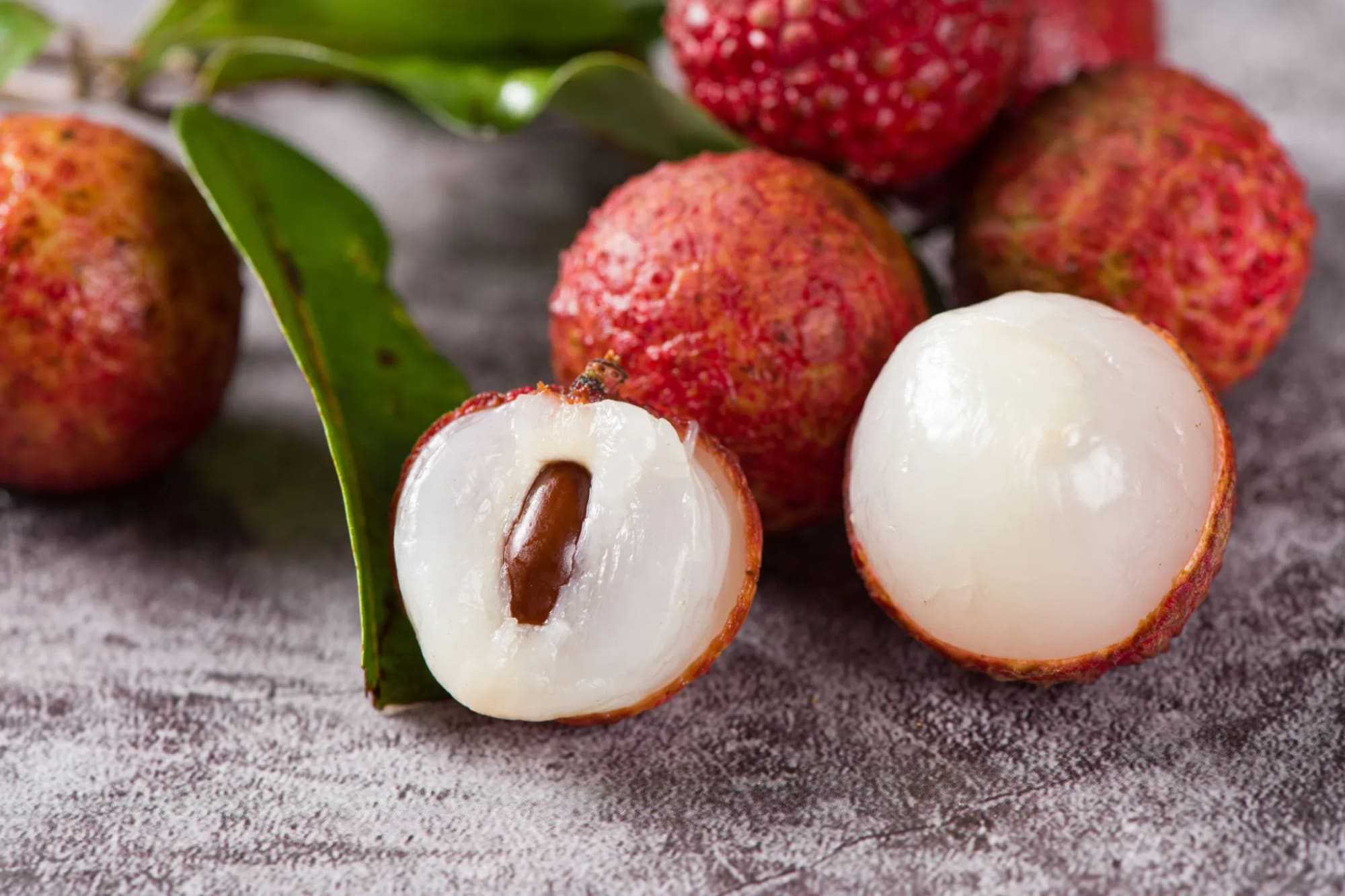
A lychee cut open to show the white flesh and dark seed, beside whole unpeeled fruit and a leaf

The one thing to know

It does not ripen after picking

A lychee cut green stays green. There is no ripening on the way to you, no softening in a bowl, no window in which it improves. Whatever sugar and aroma the fruit has when the panicle is cut is all it will ever have — which is why almost every lychee sold in Europe is a disappointment, and why we cut each panicle only once it is ready.

The shell is the other half of the problem. Within about three days of picking it dries and browns, from bright red to dull rust. The flesh inside is still perfectly good for a while after that, but the fruit stops looking like something anyone wants to buy. Refrigeration slows it; nothing stops it.

Handling

How to keep it at its best

  1. Keep it cold, keep it humid

    The bottom shelf of the fridge, in a bag or closed box. Cold slows the browning; the enclosed air stops the shell drying out. Loose on an open shelf is the worst case.

  2. Leave it on the stem

    Fruit still attached to the panicle keeps two to three days longer than fruit pulled off. Break them away as you eat them, not when you get home.

  3. Serve it cool, not cold

    Twenty minutes out of the fridge. Straight from cold the aromatics are muted and you lose most of what makes a fresh lychee different from a tinned one.

  4. Freeze the surplus whole

    Unpeeled, in a bag, straight into the freezer. They come out somewhere between a sorbet and a fresh fruit, and they keep for months. Peel them while still frozen.

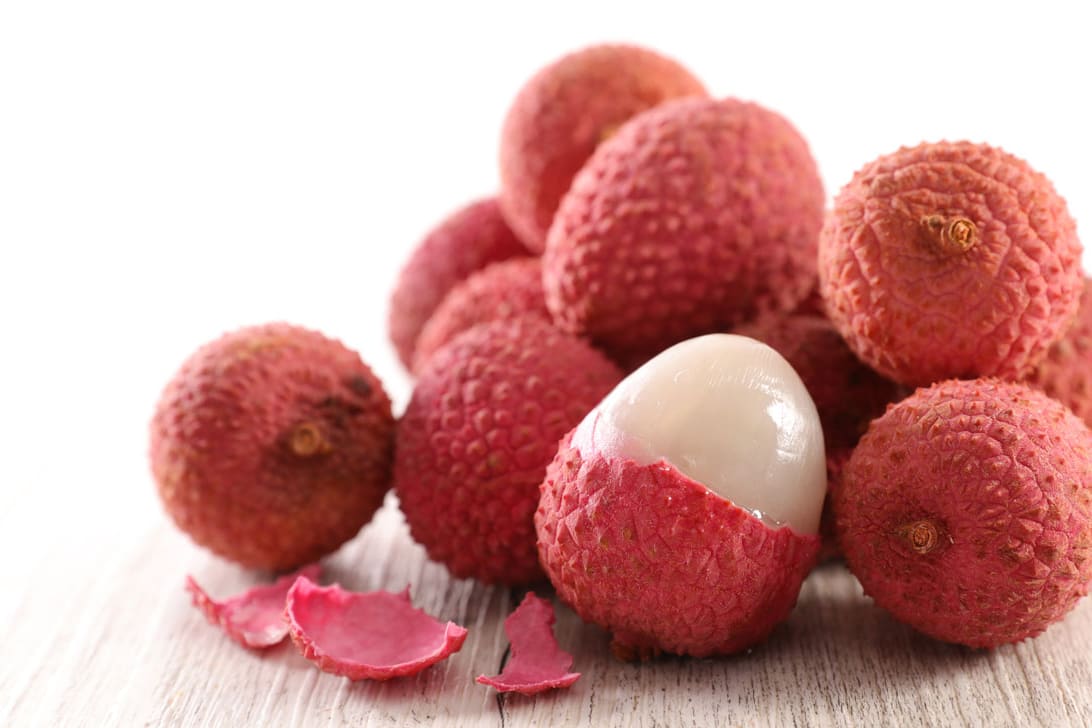
A heap of freshly picked lychees on a wooden surface, one peeled to show the flesh

The orchard year

When everything happens

Harvest is late June – early August — around 6 weeks. The rest of the year is what makes it possible.

Cool restNovember – January
Night temperatures are let down to 8–12 °C. Lychee will not set flower buds without a cool, dry spell, so this is the one time of year the glass works to keep heat out rather than in.
FloweringFebruary – March
Panicles open across three or four weeks. Two hives per house go in as the first flowers break.
Fruit setApril – May
The heavy drop. A panicle that carried two hundred flowers will finish with ten or fifteen fruit, and thinning by hand decides the size of everything that stays.
HarvestLate June – early August
Six weeks, picked by hand into crates, cooled the same afternoon. Lychee does not ripen after picking, so every panicle is cut only once it is ready.
Pruning and flushAugust – October
Cut back immediately after picking. The new growth that hardens off before winter is what carries next year’s crop.

Want some?

The farm shop opens during harvest. Restaurants and greengrocers, get in touch.