The orchard
A winter we control to the degree
The hard part is not keeping a lychee warm. It is making it cold enough, at the right time, for exactly long enough — and then getting out of the way.
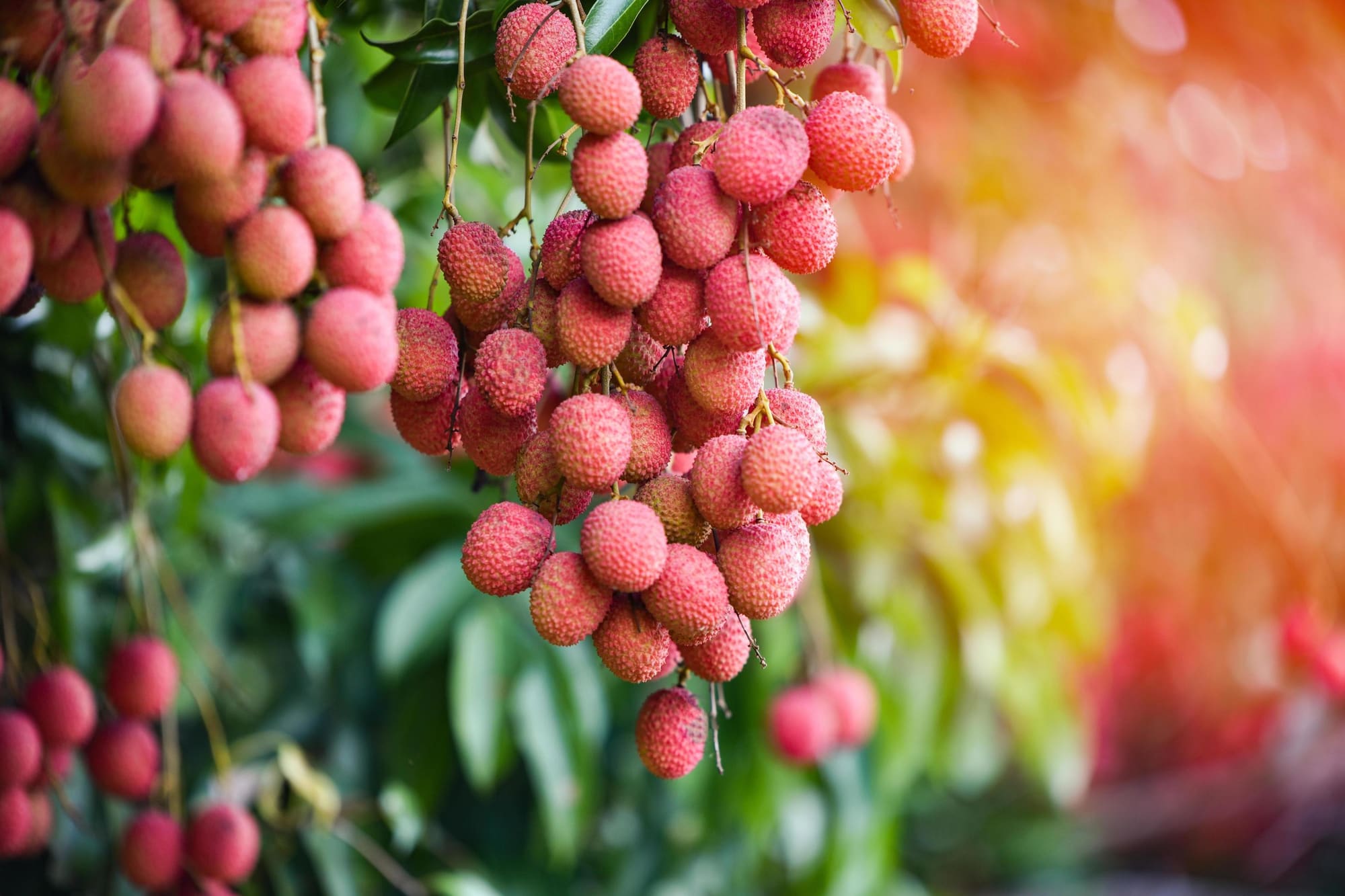
Litchi chinensis is a subtropical evergreen from southern China. It wants a distinct cool, dry season to set flower buds, and it wants never to freeze. Those two requirements sit close together, and the band of climate that satisfies both is narrow — which is why the fruit is grown commercially in Guangdong, northern Vietnam, Bihar, Queensland and Madagascar, and almost nowhere in Europe.
In Italy the outdoor limit is Sicily and parts of Calabria, and even there fruiting is unreliable. Ambrosio sits at 122 m in the Po valley, roughly a thousand kilometres north of that line. Outdoors the answer here is simply no.
Under glass the answer becomes yes, but only if the glass is used to manufacture a subtropical winter rather than a tropical one. That distinction is the whole farm.
The year, step by step
Six things that have to go right
- 01
The cool rest
From the first week of November the houses are opened up at night and the trees are held between 8 and 12 °C, dry, for about ten weeks. This is counter-intuitive — the glass is working to lose heat, not keep it — but lychee will not initiate flower buds without it. Too warm and the tree simply pushes another flush of leaves; too cold and the wood is damaged. The whole crop is decided here, in the part of the year when nothing appears to be happening.
- 02
Frost protection, not forcing
Heat comes from a biomass boiler running on prunings and local woodchip, backed by the thermal mass of the concrete floor. We are not trying to bring the season forward — an early crop would ripen into the worst of the Lombard summer heat. The heating exists to hold the line at about 4 °C on the handful of nights each winter that would otherwise kill the trees.
- 03
Bees, indoors
Lychee flowers are tiny, greenish and self-sterile in practice — without insects, a tree in full bloom sets almost nothing. Two hives go into each house as the first panicles open and come out once flowering finishes. The houses stay shut through those weeks, so the bees have nowhere else to work.
- 04
Thinning by hand
A panicle can open two hundred flowers and finish with a dozen fruit. That natural drop is normal, but what is left still has to be reduced by hand, or the tree carries too much and every lychee on it comes in small. Two passes, three weeks apart, in May.
- 05
Water on demand
Drip lines on soil-moisture sensors, fed from tanks that collect runoff from the roofs. Eighty hectares of roof turns out to be a very effective rainwater catchment, which matters in a region where summer irrigation is under real pressure.
- 06
Cut back straight after picking
Pruning happens within days of the last fruit coming off. The flush of growth that follows has to harden off before autumn, because that mature wood is what carries next year’s flowers. Prune late and you lose a season.
What it costs
Honest about the trade-off
Growing fruit under glass at this latitude uses energy that growing it in Guangdong does not. It is worth being straight about that.
The counter-argument is the one that applies to most protected cropping in Europe: the alternative is not local lychee grown outdoors, it is lychee flown in. Air-freighted fruit from Asia or southern Africa carries a far larger footprint per kilo than our winter heating does, and it arrives picked under-ripe because it has to survive the journey.
We are not claiming the crop is carbon-neutral, and we would rather not pretend the sums are simpler than they are. What we can say is specific: the boiler burns our own prunings and woodchip sourced within the province, the roofs supply most of the irrigation water, and nothing leaves the farm by air.
- 80 haThe estateBuilt out under glass in stages from 2016
- 8–12 °CWinter nightsHeld for roughly ten weeks to set bud
- 2 hivesPer houseIn as the first panicles open
- 122 mAltitudePo valley, north of the outdoor limit

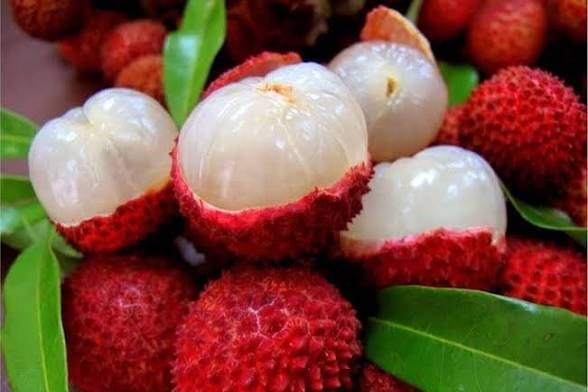
See what comes off the trees
Two cultivars, picked in sequence across six weeks.